
Gender-sensitive communication on social media, in practice: a pilot experience at UNICA


By Manuela Aru and Alessandro Lovari, University of Cagliari

A challenging, but definitely inspiring and stimulating experience. Every step of the process was fundamental: from the study of the materials to the design of every single part of the communication campaign”.

With these words, a student of the course of Public Sector Communication at the University of Cagliari described the experience in which she has been involved with other 19 students in January-February 2021: a role-play activity in which the students had to act like a real communication agency, with the goal to design communication campaigns on Instagram, following the principles of gender-sensitive communication.

The initiative, designed and developed by Alessandro Lovari, Manuela Aru and Maria Antonietta Tolu (Department of Political and Social Sciences), has been promoted with the aim to foster the mainstreaming of a gender-equality culture within the students community and to put in practice the concepts highlighted by the gender-sensitive guidelines developed in SUPERA. In UNICA, the gender equality plan (GEP) can be conceived as an open laboratory, that may host pilot activities directly involving the different parts of the university community.

While the general goal of this pilot initiative was the engagement of the student’s community on the topics of equality and inclusion in academia, one of the specific objectives was to guide the students among the four steps of the design and implementation of an institutional social media communication campaign:
1) research and analysis of the context and the target groups;
2) remote brainstorming sessions to understand and analyse the proposed topics and key messages;
3) design and creation of gender-sensitive graphics and texts;
4) publication of the contents on Instagram, following an editorial calendar.

The final results can be described as effective, impactful and surprising, especially in terms of visual identity (the way you shape perception and create an impression through the values communicated by the graphics), tone of voice (the way students have decided to communicate the messages) and coherence between the general strategy and the objectives.

Effective – Although free of a previous knowledge or experience in the field of gender-sensitive communication, the students managed to adopt a perspective free of unconscious biases.

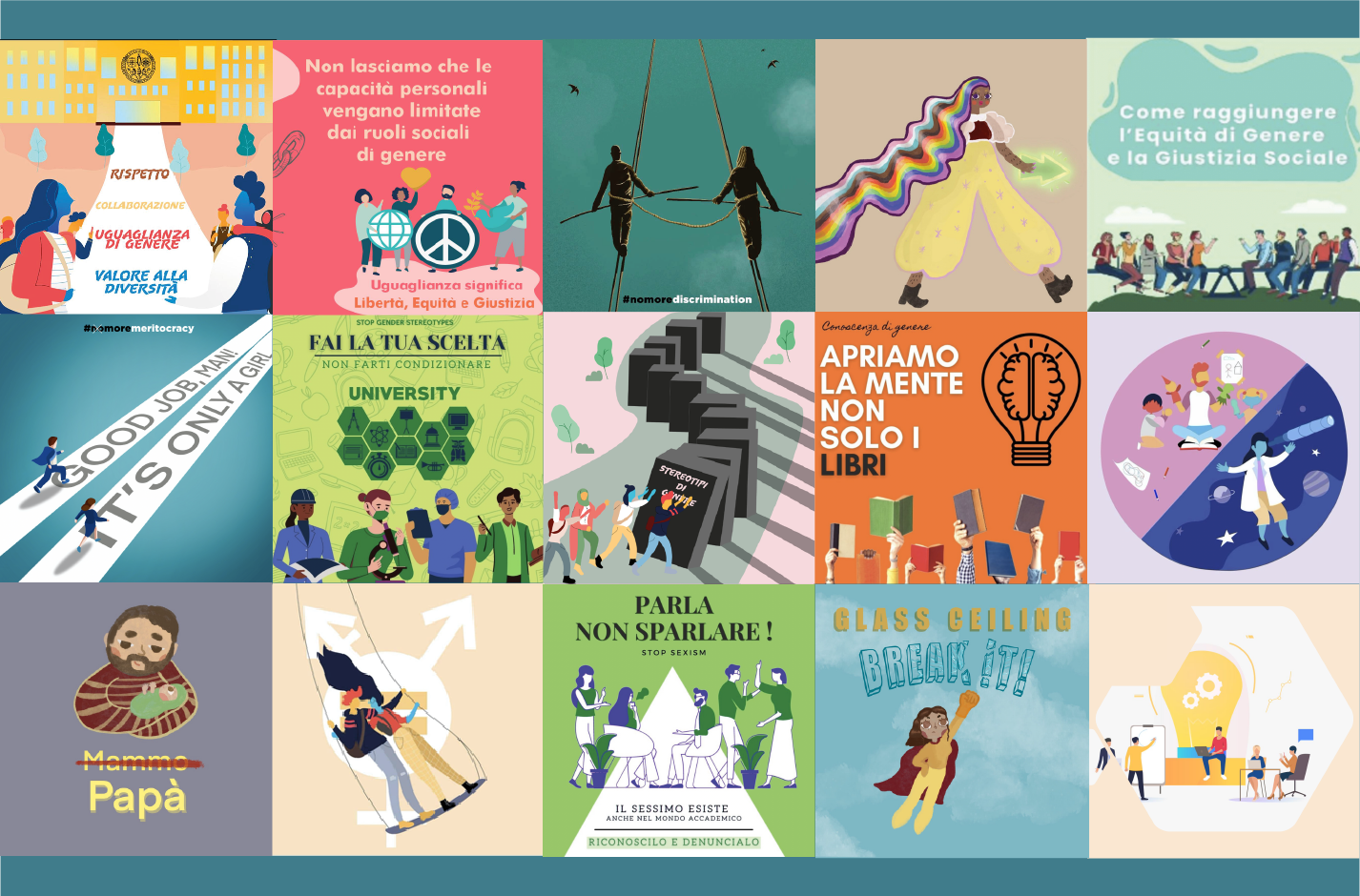
How shall we represent the impact of gender stereotypes on academic career? “No common metaphors: let’s pick the image of the domino effect”

What visual images can we use to describe the gender inequalities? “Not only ladders: what about depicting two funambulists linked each other by a rope, or two people together on a swing?”

A wide range of original representations have been chosen, from comic strips to statistics and graphs: an innovative and effective way to understand and describe gender-related issues to the wider public of the University community.

Campaigns by Adelaide Fois, Luca Scintu, Marta Rachele Pusceddu, Riccardo Ansaldi, Elisa Frongia, Dario Fonnesu, Simone Pucci and Davide Caboni

Impactful – One of the most relevant outcomes one could highlight is the care devoted by the students to inclusion and gender-sensitivity both on texts and visuals. The thing that mainly drew our attention and curiosity has been the great variety of the visuals used to depict the different moments of the academic life. Books as big as houses, people with blue skin, paths made of words, non-binary people with rainbow hair: an impactful representation of the concept of inclusion.

Campaigns by Michela Locci, Valentina Demurtas, Sara Mandis Pusceddu, Francesca Delepierre, Adelaide Fois, Luca Scintu, Marta Rachele Pusceddu, Riccardo Ansaldi, Laura Spissu, Silvia Uccheddu, Michela Vargiu and Giangabriele Tortora

Surprising – The use of Instagram could be considered an ordinary, daily and common task by 19-24 years old students; but it may still provide an effective way to get these students feel free to express their imagination and creativity. Indeed, Instagram includes text, video and pictures, with the possibility to create engagement with polls, question’s boxes, Stories and live streaming.

The most surprising detail concerns the capacity – and the courage – of the students to put themselves out there to create contents, express an opinion and talk about difficult topics such as gender-based violence, sexual harassment and mobbing with empathy and care. They created contents using the most powerful Instagram tools as the Stories (contents that disappear after 24 hours), the IGTV (longer videos used to create more compelling contents) and Reels (a new instrument to record and edit 15-seconds videos with music and effects). They always kept their language clear, as required by a public sector organisation, and respectful of all the differences and needs, in the effort to adopt an intersectional perspective.
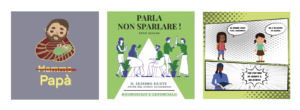
Campaigns by Michela Locci, Valentina Demurtas, Sara Mandis Pusceddu, Francesca Delepierre, Lara Sciola, Marta Lilliu, Alessandro Useli and Alessandro Marras

It is important to highlight that the use of this uncommon approach by the students required an intense preliminary study: indeed, the first step of this project, according to the goals of the course, was the study of the key concepts of public sector communication and gender communication, and the analysis of different communication campaigns on gender topics released in Italy and Europe in the last few years. This preliminary work aimed at developing the ability to distinguish good and bad communication practices in the development of a campaign.

The study of the SUPERA communication plan provided a structure to the work projects: each group chose six of the SUPERA key messages – targeting the students communities – and developed six Instagram posts, with original graphics and captions. The analysis of the gender-sensitive communication guidelines produced by SUPERA has also been essential to guide the students through the values and the standards of gender-sensitive communication.
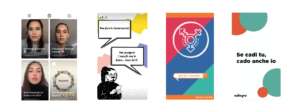
Campaigns by Laura Spissu, Silvia Uccheddu, Michela Vargiu, Giangabriele Tortora, Adelaide Fois, Luca Scintu, Marta Rachele Pusceddu, Riccardo Ansaldi, Lara Sciola, Marta Lilliu, Alessandro Useli and Alessandro Marras, Elisa Frongia, Dario Fonnesu, Simone Pucci and Davide Caboni

Each project was presented via Zoom to a committee of researchers and professionals in the fields of public and gender-sensitive communication who expressed its opinions and points of view on each work group, creating an inspiring moment of exchange and knowledge sharing. The committee was composed by a representation of the SUPERA team at UNICA and by a specialist in the public sector communication field, Franca Faccioli, Professor at the University of Rome – Sapienza.

We can definitely say it: the students of UNICA won this challenge! Great job!

Fighting gender-based violence in research and academia: the UniSAFE project

By the UniSAFE Consortium

Gender-based violence is a pervasive global problem, and the context of research and higher education is no exception. Despite the scale and the social, economic and health costs of gender-based violence, it remains largely under-reported and under-researched.

Funded under the EU’s Horizon 2020 programme, the UniSAFE project aims to produce better knowledge on gender-based violence (GBV) in research organisations and to translate this knowledge into operational tools for higher education, research organisations and policymakers. Launched in February 2021, UniSAFE will run for three years.

The project explores the mechanisms of GBV, its social determinants, antecedents and consequences, by developing an ambitious multi-level research design and a holistic 7P model, to collect, analyse, synthesise and compare qualitative and quantitative evidence at three levels:

  • Prevalence and impacts of GBV will be analysed via data gathered by a survey among 45 research performing organisations and by a Europe-wide survey of mobile researchers (micro level).
  • Organisational responses and infrastructure will be investigated via data gathered by in-depth case studies, interviews, and strategic mapping of research organisations in 15 member states (meso-level).
  • Legal and policy frameworks will be examined through extensive mapping by national experts in the 27 European member states and 3 associated countries (macro-level).

The 7P research model employed at UniSAFE covers Prevalence, Prevention, Protection, Prosecution, Provision of services, Partnerships and Policy. This holistic approach is better equipped to collect comprehensive data, analyse their relation, and translate findings into operational tools than the conventional 3P model (Prevention, Protection, Prosecution) or the Istanbul Convention 4P model (3P and Policy).

UniSAFE is designed to achieve its results through research, education and outreach activities involving researchers, stakeholders and policymakers across Europe. As a result of the multi-field design, the project will provide in-depth knowledge of existing problems on the one hand, and current and future priorities on the other. Its outcomes will include:

  • A better understanding of GBV in European universities and research organisations and its impact on people, organisations and society.
  • Effective policies and measures implemented at universities and research organisations.
  • Increased capacity of students and staff to address GBV.
  • A toolkit and recommendations to reduce GBV in academic environments and research workplaces in Europe.

UniSAFE relies on a highly qualified and multi-disciplinary consortium, with a strong record on research, the law and policies to combat gender-based violence in the EU field of academia and research. Two of SUPERA’s partners are part of the UniSAFE consortium: the Complutense University of Madrid and Yellow Window.

2021-03-31T18:18:49+02:00March 11th, 2021|Tags: , , |

The unequal effects of the Covid-19 pandemic on Portuguese women academics


By Filipa Marques, Sofia Miguel (NOVA University Lisbon) Mónica Lopes (University of Coimbra)

The COVID-19 has caused substantial disruptions to academic activities:

  • Working parents have to balance their time between academic responsibilities, childcare and domestic tasks;
  • Professors have to ensure online lectures for their students, sometimes using pre-recorded lessons, in order to mitigate the distance;
  • Researchers have to adapt to a new reality, which constrains the lab work to a minimum.

The general impact of confinement measures in the academic performance of professors and researchers has been a subject of interest, mainly because most of working professors and researchers are also parents, some with young children in their care. It is a matter of public discussion that COVID-19 is having an uneven influence with those with child/adult care responsibilities – particularly women. Female professors and researchers have been facing more difficulties to publish their research due to the confinement caused by COVID-19, according to data that show that women’s publishing success dropped after schools closed [1, 2]. A recent study indicates a sharp decrease in original research-papers submissions by female researchers in several international journals, during confinement caused by COVID-19 [3]. As the novel virus reveals an endeavour to researchers in the medical and health sciences disciplines, the proportion of published papers in such fields dramatically increased to promptly allow results dissemination. In this regard, female publication success during this period should have increased, not decreased, since women have been increasing their representativeness in these fields [4, 5]. This fact illustrates the confinement effect on women’s publication records and at the preprint and journal submission stages.

In Portugal, COVID-19 has affected professors and researchers similarly, as in other countries, facing the same challenges. Aware of this, SPEAR partner, NOVA University Lisbon, has been laying foundations towards a more equal-opportunities-academic environment that aims to implement gender-sensitive policies and help reduce the institutional gender gap.

The data on the effects of COVID-19 in female academics are still scarce. However, there are two research projects ongoing, specifically devoted to exploring the effects of the pandemic at the national level. The only empirical research already documenting the impact of COVID-19 in the work conditions and academic performance of women in Portuguese research institutions has been carried out by the University of Coimbra, within the framework of the SUPERA project. Based on a survey questionnaire of teaching and research staff, the findings shed light on gender inequalities that are shaping COVID’s impact on working conditions, work-life balance, and academic time usage and efficacy. It has been particularly more difficult to academic women, especially younger mothers in non-tenure-track positions.

In Portugal, academic women seem to be more exposed to not only the severity of psychological/emotional effects of the COVID-19 crisis but also to the increased burden of domestic and care duties during confinement. Moreover, the pandemic appears to affect disproportionately the housework and care routines of women (especially younger academic mothers), as well as the personal routines of female academics, who reported more often a reduction of leisure time during the lockdown.

The increased household and emotional burdens arising from COVID restrictions also affect the work-family negotiations and conflicts, posing differentiated challenges to reconcile the competing time demands of paid work and family. Substantial differences are observed between men and women perceptions of how the pandemic has affected their work. Female academics and academics with young children in the household most frequently emphasise the influence of COVID-19 on the amount of time dedicated to professional work. Moreover, when analysing the changes on time allocation to the various domains of the academic activity, one can observe that the reinforcement of teaching and administrative tasks during the confinement is specially bound to female dedication. In the case of young mothers, the priority given to teaching occurs at the expense of research activities (e.g., manuscript and grant writing, peer review and serving on funding panels) which are critical to career progression.

The study also gives important insights on the extent to which the distinctive burdens imposed by the lockdown to female scientists and scientists with young children impacted academic productivity. Nevertheless, it is too early to get a complete picture of this impact, as the lockdown period has been relatively short compared to normative research timelines. The outputs considered to explore the effects of the pandemic in academic productivity were mainly of scientific character but also connected to pedagogical activities, knowledge transfer and dissemination. When solely considered, neither gender nor parental status significantly affected the changes in academic output observed during the “stay home order”. Nonetheless, when considered in combination, gender and parental status displayed a significant influence in the differences observed between the pre-pandemic and pandemic period, placing female scientists with children up to 12 in a particular disadvantage.

Moreover, women without children and men with and without children have increased their output submission during the confinement, whereas younger academic mothers faced an inverse trend. This difference may further aggravate the gap between men and women, as said institutions have an increasingly research-oriented strategy. This may translate into a significant disproportion of the performance management policies regarding tenure, recognition and promotion since most academic careers evolve directly from strong publication records and academic performance [6].

Although limited in scale and scope, this study provides sound quantitative evidence highlighting gender disparities in how the pandemic has affected the scientific workforce in Portugal. Academic institutions and funding organisations should consider the inequalities regarding not only academic productivity but also material and non-material working conditions to put in place some measures. The metrics to assess funding and academic position applications rely on bibliometric indicators that tend to be unidimensional. Therefore, a requirement for academic assessment and monitoring should include institutional measures to promote career development and talent retention, a more diverse and inclusive working environment, and family-friendly policies. These would be important to provide resources for early-career academics, particularly women with young children, to attenuate the negative effects of academic productivity resulting from the COVID-19 pandemic.

This article is the result of a joint initiative among the H2020 sister projects SPEAR and SUPERA and has been published also on the SPEAR website.

XI European Conference on Gender Equality in Higher Education: call for abstracts

The Women and Science Unit of the Spanish Ministry of Science and Innovation and the Ministry of Universities in cooperation with the Technical University of Madrid (UPM) and the Spanish Foundation for Science and Technology (FECYT) are pleased to announce a new call for abstracts for the 2021 Conference on Gender Equality in Higher Education:

https://www.genderequalityconference2021.com/call-for-abstracts/

More than 200 abstracts already received and evaluated in 2020
New deadline for abstracts submission: 24th of March, 2021
See the topics of the Conference that include a new thematic area on gender, science and COVID-19

The European Conference Gender Equality in Higher Education (GEHE) is an academic forum to communicate new research and analysis on gender and science. These conferences also welcome presentations on the development of gender equality policies as well as on the implementation of gender equality plans in research performing organizations (RPOs) and research funding organizations (RFOs).

The 11th edition of GEHE was planned to be hosted by the UPM, Madrid, in September 2020 but the pandemic led to postpone the event. The Conference will be online from the 15th to the 17th of September 2021. More than 200 abstracts were already received and evaluated by our international scientific committee last year. The aim of this new call for abstracts is to give the opportunity to present new research, analysis and experiences from the gender and science community across Europe.

The online edition will include different activities:

  • Plenary conferences by main speakers.
  • Oral communications in parallel sessions.
  • Symposia/workshops.
  • High-level panel as closing event at ETSI Industriales –UPM (live streaming).
  • Online networking activities.

Follow the news on #GEHE2021 in the webpage: https://www.genderequalityconference2021.com

Gender equality in funding mechanisms: a new webinar for RFOs on 26 January

Among RFOs, there is an increasing interest in the design and implementation of measures to improve the impact of their funding schemes on gender equality. With this regard, SUPERA has launched a series of webinars and online workshops to facilitate experience exchanges between Research Funding Organisations (RFOs) that develop – or plan to develop – a Gender Equality policy. After the first two events that took place in November 2020, a new webinar is planned for Tuesday, the 26th of January 2021 (h. 11-12:30 CET): “Gender equality in funding mechanisms“.

During the webinar, participants will have the possibility to listen to two experiences of Gender Equality Policies and measures with regard to funding research. Both experiences are from Spain, a country that has been a pioneer in the EU to develop gender equality measures.

The first experience is from the regional Government of Navarra. Juan Cruz Cigudosa García, Counsellor for the area of University, Innovation and Digital Transformation, will share the experience of the Government in using their funding mechanisms to improve the gender balance in research teams, as well as in including gender in the research content of the proposals.

The second is from the State Research Agency active at national level, directly linked to the Ministry of Science and Innovation. This agency recently approved a Gender Equality Plan.  Victoria Ley, Head of the evaluation and monitoring department, will share the content of the GEP as well as the context and process to get it approved.

The second part of the webinar will be devoted to questions and answers and exchanges with the participants.

The participation to the webinar is open to everyone; prior registration is required via the online registration form.

2021-03-10T11:52:11+02:00January 13th, 2021|Tags: , , , , |

In support of gender rights and academic freedoms: our solidarity statement


By the SUPERA Consortium

We, members of the EU-funded SUPERA initiative, express our deepest concern for the reiterated and coordinated attacks on gender rights and academic freedoms in several EU member States such as Hungary, Poland or Romania, and our most resolute support to those who, from the civil society or the institutions, defend the values of gender equality and non- discrimination and the rule of Law enshrined in EU treaties.

We manifest our strongest solidarity with women-led strikes in Poland and our firmest contempt for the attempts to undermine gender equality, gender rights – including the rights of LGBTQ persons and sexual and reproductive rights, as well as free speech and the freedom of research at universities in any member state of the European Union and beyond.

Those rights and freedoms are fundamental to open, democratic and diverse societies, and should be firmly defended wherever threatened.

Read and download the solidarity statement.

2021-03-25T12:14:05+02:00November 30th, 2020|Tags: , , , |

The Central European University GEP now available for download

In May 2020, the Central European University has approved its first gender equality plan. Now the full document is fully available at this link.

Read the interview to Andrea Krizsan, research fellow at CEU’s Center for Policy Studies and Ana Belen Amil, gender equality officer at CEU, about the GEP approval: https://www.superaproject.eu/ceu_gep/

2021-03-25T10:38:00+02:00November 6th, 2020|Tags: , , |

Join us! The institutional SUPERA video is online

By Manuela Aru and Paola Carboni, University of Cagliari

The SUPERA values, methods and key action areas to foster gender equality in research organisations can now be presented in a new format to anyone interested in knowing more about gender mainstreaming in Academia: the SUPERA institutional video is online!

This project outcome is the result of an intense work that involved all the partners in exchanges and interaction to define the creative concept and the best way to communicate it: from the voiceover to the selection of images, and to the translation of the subtitles. It is worth noting that the Cagliari-based team who implemented the video (editing, illustrations, animations, production) it is totally composed by female professionals.

At first, we had planned to develop the institutional video by making interviews to key actors during the Consortium Meeting that was meant to be held in Cagliari las June. Due to the spread of the Covid-19 crisis, the whole event was held on Zoom. For this reason, we had to radically rethink the initial concept. The new idea was to be developed completely in a distance-mode, without the chance to film or interview tany of the key people we had in mind. The new video concept is based on the animation of photographs and original graphics, created to represent and communicate gender inequalities and our actions to fight them.

A special attention was devoted to adotp a gender-sensitive, non-stereotypical and inclusive communication register. The video will be available soon with subtitles in English, Italian, Portuguese and Spanish.

For the first European Gender Equality Week on October 26-29, we started a communication campaign marked by the hashtag #JoinUs, representing an invitation to all the people  interested in engaging with our initiatives toward gender equality and social justice in research and academia. The #JoinUs campaign is now live on SUPERA social media channels and several European institutional accounts are sharing it.

Watch the video and follow the #JoinUs campaign on Facebook, Instagram, Twitter and Youtube: two short videos will be released in the next days!

Experience exchange between Research Funding Organisations: register to the webinars

Among RFOs, there is an increasing interest on the design and implementation of measures to improve the impact of their funding schemes on gender equality. Sometimes these measures may take the form of a Gender Equality Plan, or of a policy, or other individual measures.

SUPERA is launching a series of webinars and online workshops to facilitate experience exchanges between Research Funding Organisations (RFOs) that develop – or plan to develop – a Gender Equality policy.

The first two webinars will take place on 13 and 18 November, 2020. Each webinar has a 90 minute duration and starts with two RFOs that explain their experience linked to the theme of the webinar. This is followed by a 40-minute Q&A and exchanges with the audience.

Webinar #1 – 13 November 2020 from 10:00 to 11:30 am CET
Gender Equality in RFOs, two experiences
Experiences from the Autonomous Region of Sardinia (RAS) and the Vienna Science and Technology Fund (WWTF) on the steps in developing a comprehensive policy.

Click here for the registration form.


Webinar #2 – 18 November 2020 from 10:00 to 11:30 am CET
How can RFOs fight gender bias
Experiences from French Agence Nationale de la Recherche (ANR) and the Technology Agency of the Czech Republic (TA CR) on measures to avoid gender bias.

Click here for the registration form.

To complete and enhance these initiatives, Yellow Window developed a tool that brings together resources and examples of measures that RFOs can take (and in several cases are already taking). The tool follows the typical journey or cycle of a call for proposals and is available as a web page at this link and as a board on Miro at this link.

2021-03-25T10:39:32+02:00November 6th, 2020|Tags: , , |

Overcoming gender gaps in research funding organisations: RAS approves its Gender Equality Plan

By Autonomous Region of Sardinia core team

The Regional Programming Centre of the Autonomous Region of Sardinia directly supervises and manages the regional funds for research and innovation. These funds finance basic research projects, young researchers and the investments in support of the innovation system. These functions and responsibilities of the Sardinia Region are carried out on the basis of a specific law, the Regional Law n. 7/2007, in favor of research and innovation, which currently has no any reference to gender policies. Therefore, the objective of the RAS in the activities within SUPERA project has been focused on creating an operational tool aimed at intervening on gender issues in the research field in Sardinia: the Gender Equality Plan (or GEP).

With the goal of building a GEP that could have the most effective impact, RAS started its activities by verifying the possible existence of a gender gap in the provision of resources to support research. The aim was to give indications to the policy maker and to create a favorable environment for the access to resources.

Specifically, this first phase was carried out following three guidelines:

1) ANALYSIS. This step concerns: the reference regulatory framework; the scope of applicability of the gender discipline in the research field; gender differences in the provision of grants for the implementation of research projects.

2) LISTENING. A shared and participatory path has been started among regional stakeholders on gender issues. The goal was to bring together in a hub the internal and external stakeholders, capable of providing data, suggestions and ideas useful for the drafting of the GEP. So far, the following external stakeholders participated in the hub: the Department of General Affairs and Personnel of the Sardinia Region, the agency Sardegna Ricerche, the Regional Councilor for equality, the Regional Commission for equal opportunities, Giulia Giornaliste, Corecom Sardegna, the Equality Councilor of the Metropolitan City of Cagliari and the Formez PA. This phase is dynamic as the hub is always open to the adhesions of new members. The stakeholders will support the GEP throughout its implementation phase.

3) OBJECTIVES. The definition of the objectives of the GEP led to the drafting of the Plan.

The first objective identified by the GEP is to bring about a structural change in the approach to gender issues in the Sardinia Region. Within the actions carried out to achieve this goal, it is important to emphasise the inclusion of the SUPERA principles in the PRS – Piano Regionale di Sviluppo (RDP – Regional Development Plan) 2020-2024. The RDP is the five-year regional planning document that defines the strategies and policies that Sardinia intends to implement over the course of the legislature. Consequently, the inclusion of SUPERA in the Plan represents a clear political commitment on the part of the President of the Region and his Council towards gender policies.

The second objective of the GEP is focused on Regional Law 7/2007 and it is intended to introduce corrective actions aimed at guaranteeing gender equality within the calls for basic research.

The third objective recalls the results of the descriptive analysis and the suggestions of stakeholders within the project hub. In particular, it considers the criticalities of the system of evaluation of research projects, which is not very sensitive to gender issues.

In conclusion, it is emphasised again that the GEP is conceived as a dynamic and constantly evolving tool, which can always lead to positive updates. Its structure has been defined by using the Logical Framework Approach (LFA) and indicates objectives, actions and indicators providing for appropriate actions throughout the life span of SUPERA.

The RAS Gender equality plan is available at this link.

2021-03-25T12:18:44+02:00November 5th, 2020|Tags: , , , , |